Have you ever had to "discipline" your child in public? How we discipline them, correct them, and even confront them about their misbehavior is scrutinized, criticized, and categorized. This father is under fire for the way he handled a personal matter with his daughter - on camera and at a public sporting event in which she was competing.
According to the AP,(March 28) - Ukrainian swim coach Mikhaylo Zubkov was reunited with his swimmer daughter Kateryna after an Australian court declined to extend an intervention order against him Thursday.
Now we all have something to say about it. We all feel the need to stand up for this girl against her father. Whether he was right or wrong; whether we should or shouldn't; I caution you about stepping into that ring. Take some time first to decide whether or not you belong there.
Does this mean that we turn a "blind eye" to injustice against children around us? No, it doesn't. But we need to ask ourselves if we're in it for the long haul or just the moment. Children need long term advocates, not just adults to get involved when it suits them.
And it is a matter of "casting the first stone" as well.
After watching this, you probably have a good size stone in your hand. Are you really ready to let it fly?
Thursday, March 29, 2007


Sunday, March 04, 2007
5 Tips for Transforming Your Kids into Spiritual Champions


Guest Columnist: Jim Burns, Homeword
Just because you are raising your kids in a Christian home doesn’t mean that they’re automatically getting the spiritual training they need. Parents need to be intentional about bringing their children up with Biblical values. They won’t just learn them by accident. We need to step up our efforts in making the spiritual growth of our kids a top priority. Recently, George Barna, noted Christian researcher and author, was a guest on our radio broadcast, HomeWord with Jim Burns, and he provided keen insights, sharing five tips for transforming our kids into spiritual champions.
1. Help Kids Grasp Their Purpose. No one ends up on earth by accident. God places us here for a purpose. That purpose relates to how we fit into God’s kingdom -- how we will know, love and serve God in this life, and then become a blessing to everyone with whom we come in contact. The problem is that even though a person’s habits and mindsets are formed at an early age, many parents have no plan for helping their kids discover who God has created them to become, and thus leave this to circumstance and chance. Parents are key to helping kids discover their purpose. This means helping kids establish a Biblical worldview, as well as teaching them about their uniqueness and value as a child of God. It also specifically means reevaluating the definition of success, transforming it from a popular cultural view (good job, good citizen, making money, possessions…) to a Biblical view (commitment, faithfulness, servanthood, sacrifice…).
2. Fan the Flames of Passion. Too often, our kids see little passion in Christians. This generation of kids, mosaics as Barna defines them, don’t want to just spend time on earth during their lifetimes. They want to pour themselves into a cause, to make a difference with their lives. There is nothing more important in life than loving and serving God. So our kids need to see a burning passion for Christian life -- loving God and loving their neighbors -- embodied in their parents. We have got to give our kids a reason be passionate about their faith.
3. Strengthen Kids’ Perseverance. Helping our kids develop perseverance means that, as parents, we have to be proud of the fact that we’re Christ-followers. We’ve got to face the fact that living out a dynamic faith means that there will be opposition and persecution (see 2 Timothy 3:12), and that we are willing to make a stand for our faith. Part of the strength to persevere comes from involvement with a community of fellow Christ-followers (the church) who can encourage our kids, support them and pray for them. Further, our God calls us to challenges that are beyond our own means to accomplish. This is by divine design and forces us to rely upon God in order to be up for the task. This reliance, fostered by an intimate relationship with God, builds perseverance. As we talk about the need to rely on God to our children and then model that same reliance in our own lives, this key quality of perseverance will grow in their lives.
4. Help Kids Tap into the Power Source. Kids don’t naturally understand the power that is available to them to make a difference with their lives. They need to be taught that our ultimate power source is God. The Apostle Paul, writing to the church in Ephesus, declared that the same power that raised Christ from the dead is available to each Christ-follower (see Ephesians 1:19-20). Still, our kids are growing up in a culture that boasts other power sources (money, influence, force…). Parents must help kids discern that while other power sources have a place, their ultimate source of power comes from God. It comes back to parental modeling, once again. Our kids see who and what we rely on in difficult circumstances, or when we want to accomplish something. Our lives need to demonstrate that we are plugged into and rely upon God for our strength.
5. Point Kids to True, Lasting Pleasure. We live in a culture that places ultimate value on personal satisfaction and pleasure. Yet, the pleasures our world affords are often fleeting (see Hebrews 11:24-26). God’s Word provides a different take on what real pleasure looks like. True pleasure comes from the fulfillment experienced in loving and serving God. It’s about living a life of sacrifice, living for more than just ourselves. There’s no doubt that this is difficult to do – for us and for our kids – and as our kids take a stand for what is right, rejecting some of the pleasures their peers are seeking, they will lose friendships along the way. But part of the cost of being a Christ-follower is embracing self-sacrifice, for God’s higher purposes. Jesus said, “Whoever finds his life will lose it, and whoever loses his life for my sake will find it” (Matthew 10:39). It is in this apparent paradox that our kids will find true, lasting pleasure.
Transforming our kids into spiritual champions is definitely a process. Parents need to intentionally think through what success looks like in their kids’ lives. What is the end point of your parenting years? No one can hit a target that is undefined. Random, spontaneous parenting is a recipe for failure. But it’s not too late to start! Begin thinking through what you want your kids to look like as they mature into adults. Make a simple list of what you want to see happen in your child’s life. Then, start small. Take a small step, right away. Remember, doing something, even small, with intention is better than doing nothing every time. The important thing is to begin the process!
Give us your comments on this article by clicking here. Click here to download this tip sheet (WORD / PDF).
This article is reprinted with permission and originally appeared on http://www.homeword.com/Articles/ArticleDetail.aspx?iArticleId=477&sReturnUrl=%2fArticles%2fdefault.aspx%3fsOrderBy%3dsTitle%26sAscOrDesc%3dASC%26iAbsolutePage%3d2%26sKeywords%3d%26bParent%3d1%26bStudent%3d1%26bWorker%3d1
Saturday, February 24, 2007
Sex Education: School or Parent - Who Rules?

(this cartoon originally appeared on Advocates for Youth)
Guest Columnist: Brenda Nixon
Imagine yourself as a ten-year-old blissfully walking to school; kicking pebbles as you go, listening to the birds, thinking about recess, kickball, and what’s in your lunch. Then invading your world booms the authoritative voice of the school counselor, “Ejaculation can happen during sexual intercourse, when the penis is inside the woman’s vagina. It can also happen while a boy is sleeping. This is called a nocturnal emission or ‘wet dream.’”
Explicit? Yes! Make you a little uncomfortable? Perhaps! How do you think it makes a 10-year old feel? This quote is from a curriculum given to children in a coeducation class at Boone Elementary - my daughter’s public school in KC, Missouri. It was told to Laura, then 10, without her having asked and without my knowledge or consent.
My husband, Paul, and I became informed one evening when Laura brought home her permission form in which she scrawled an emphatic, “No!” Asked why, Laura described her embarrassment and disgust at having to sit through the counselor’s comments on “breasts and breastmilk.”
Over dinner, we expanded our questions about the presentation and Laura’s thoughts and feelings. Thinking she had absentmindedly left the permission form in her backpack I asked, “When was it given to you?” Then, Laura’s bombshell reply, “When we were leaving the presentation.” Paul and I realized that our daughter was made uncomfortable in a guidance class she did not request and in which we had no foreknowledge.
So we called the school to learn what was being taught as “guidance curriculum.” After discussions with the counselor and principal, my husband and I informed several parents. They, like us, were unaware of the curriculum and naturally, had strong opinions. Some parents hadn’t even seen a parental permission form. We all met with the counselor, principal, and district’s Director of Personnel to share our concerns.
Many issues surrounded the curriculum and its implementation. We shared our daughter’s embarrassment, asking the counselor to consider a young girl’s feelings. Every parent objected to a coed environment for sexual instruction in elementary school.
One parent disapproved of schools doling out these intimate facts maintaining her right to be her child’s sex educator. The callous disregard for parental rights to informed consent had each parent righteously indignant. We questioned why the “teachable moments” philosophy is not applied to sex education.
I reminded these educators of the “too much too soon” practice of overloading kids with particulars before they are ready. My daughter’s knowledgeable counselor forgot - or never learned - child development. That the frontal lobe of the human brain, which controls reasoning, social conscience, and judgment, develops gradually and isn’t fully functional until the early teens. Therefore, children may get the sex facts but have limited ability to apply them to appropriate behaviors.
It was a tense yet productive confrontation. Reluctantly, these administrators agreed to suspend teaching the curriculum until they canvassed all parents with permission forms. Further, they agreed to release permission forms with a lengthy notice so parents could preview materials and make an informed choice on their child’s participation.
Additionally, the school board, upon hearing of our concerns, began a policy to forever correct this oversight. To adopt a policy that permission forms are given with a standard two-week notice would protect the rights of the parents - who advocate for their children.
Parents, be ever vigilant in protecting your rights. Be knowledgeable of what is going on in your child’s classroom and school. Ask questions, keep up communication with the teacher, attend PTA and school board meetings, and get to know your school administrators.
Always be an advocate for your child. She is depending on you to protect her from unwanted sexual information whether it’s from the public school, the media, or an individual. Children learn better only when they feel safe and comfortable.
As a parent, I encourage you to adopt the prayer of Robert Louis Stevenson, “Give us the strength to encounter that which is to come.”
Imagine yourself as a ten-year-old blissfully walking to school; kicking pebbles as you go, listening to the birds, thinking about recess, kickball, and what’s in your lunch. Then invading your world booms the authoritative voice of the school counselor, “Ejaculation can happen during sexual intercourse, when the penis is inside the woman’s vagina. It can also happen while a boy is sleeping. This is called a nocturnal emission or ‘wet dream.’”
Explicit? Yes! Make you a little uncomfortable? Perhaps! How do you think it makes a 10-year old feel? This quote is from a curriculum given to children in a coeducation class at Boone Elementary - my daughter’s public school in KC, Missouri. It was told to Laura, then 10, without her having asked and without my knowledge or consent.
My husband, Paul, and I became informed one evening when Laura brought home her permission form in which she scrawled an emphatic, “No!” Asked why, Laura described her embarrassment and disgust at having to sit through the counselor’s comments on “breasts and breastmilk.”
Over dinner, we expanded our questions about the presentation and Laura’s thoughts and feelings. Thinking she had absentmindedly left the permission form in her backpack I asked, “When was it given to you?” Then, Laura’s bombshell reply, “When we were leaving the presentation.” Paul and I realized that our daughter was made uncomfortable in a guidance class she did not request and in which we had no foreknowledge.
So we called the school to learn what was being taught as “guidance curriculum.” After discussions with the counselor and principal, my husband and I informed several parents. They, like us, were unaware of the curriculum and naturally, had strong opinions. Some parents hadn’t even seen a parental permission form. We all met with the counselor, principal, and district’s Director of Personnel to share our concerns.
Many issues surrounded the curriculum and its implementation. We shared our daughter’s embarrassment, asking the counselor to consider a young girl’s feelings. Every parent objected to a coed environment for sexual instruction in elementary school.
One parent disapproved of schools doling out these intimate facts maintaining her right to be her child’s sex educator. The callous disregard for parental rights to informed consent had each parent righteously indignant. We questioned why the “teachable moments” philosophy is not applied to sex education.
I reminded these educators of the “too much too soon” practice of overloading kids with particulars before they are ready. My daughter’s knowledgeable counselor forgot - or never learned - child development. That the frontal lobe of the human brain, which controls reasoning, social conscience, and judgment, develops gradually and isn’t fully functional until the early teens. Therefore, children may get the sex facts but have limited ability to apply them to appropriate behaviors.
It was a tense yet productive confrontation. Reluctantly, these administrators agreed to suspend teaching the curriculum until they canvassed all parents with permission forms. Further, they agreed to release permission forms with a lengthy notice so parents could preview materials and make an informed choice on their child’s participation.
Additionally, the school board, upon hearing of our concerns, began a policy to forever correct this oversight. To adopt a policy that permission forms are given with a standard two-week notice would protect the rights of the parents - who advocate for their children.
Parents, be ever vigilant in protecting your rights. Be knowledgeable of what is going on in your child’s classroom and school. Ask questions, keep up communication with the teacher, attend PTA and school board meetings, and get to know your school administrators.
Always be an advocate for your child. She is depending on you to protect her from unwanted sexual information whether it’s from the public school, the media, or an individual. Children learn better only when they feel safe and comfortable.
As a parent, I encourage you to adopt the prayer of Robert Louis Stevenson, “Give us the strength to encounter that which is to come.”
Editor's Note: As advocates we need to be pro-active and not reactive. Talk to your child before someone else does.
©1999, Brenda Nixon
Brenda Nixon (www.brendanixon.com) is a speaker, author, educator and mom. Her book Parenting Power in the Early Years is available at amazon.com and her website.
Friday, February 16, 2007
Be Careful Little Eyes What You See
 (photo originally posted on http://www.photos-of-the-year.com/people/showphoto.php?photo=7411)
 Today's media bombards our children with images and ideas that they are just not equipped to process. It's getting harder and harder to watch what they watch, listen to what they listen to, and play what they play on the computer or video game console. As parents we can stand in the gap by previewing as much as possible those things that their little eyes see and their little ears hear.
I wrestled with bringing the following issue to your attention as it is controversial and somewhat horrifying. But if we're going to stand up for our children, we need to be informed. I want to tell you about a new RPG (role playing game) available for computer that is sweeping the country, both because some people are just plain twisted and others are dangerously curious.
"Super Columbine Massacre RPG!" created by Danny Ledonne, has hit the streets with a game that puts the players in the roles of the Columbine shooters, Eric Harris and Dylan Klebold, as they shoot up the school.
WHY WOULD ANYONE CREATE A GAME LIKE THIS???
That is the question of the day. The firestorm surrounding this game has been reported all over the internet and in gaming magazines like GameInformer. My fifteen year old son called this game to my attention as a horrifying example of game developers gone wild. A few years ago, when I spoke to 3 million radio listeners about choosing video games for children, the most violent game quoted was tame in comparison to this one.
With real security camera footage, news footage, and the killers personal diaries and other writings, this game turns the knife in the already fatally wounded souls who gave their lives that day and their families. My outrage was hard to contain.
But I have to do as I prescribe. Make sure I know the opposing point of view before I spout off about my own opinion. My opinion must be based on evidence and the only way to get that evidence is to do my homework. If you want to do your homework too, you can read for yourself what the game developers say about their product. Discernment comes after careful investigation. In order to stand firm for your child, take the time to know your opposition.
My personal opinion is that there is no place for this product, no matter how artfully the developers tried to convey their message. It is not necessary to see through the eyes of these killers in order to understand what happened and why. I'd rather focus on how God triumphed that day instead.
Friday, February 02, 2007
The Buzz and Hum of Life
Welcome to Guest Columnist: Patricia Lorenz
 Buzz, buzz, buzz…hum, hum, hum. Buzz, buzz, buzz…hum, hum, hum. The sound is rhythmic, never ending. It's a soft sound, pleasant. Reminds me of the ebb and flow of waves crashing into rocks and then quietly returning back to sea. But this sound is even softer than that. This sound could be the background for relaxation tapes of the living earth.
This buzz-hum is the sound of four fluids being pumped into my son Andrew's veins. The buzzing isn't as soothing as the hum, but nevertheless, at times is has the power to lure both of us towards slumber in his hospital room.
This young man is supposed to be hyped and careening through his last four weeks of his senior year in high school. He's supposed to be bragging to me about how many hits he got in PE softball today. Writing that last essay for English class. Or rattling off his list of graduation gift requests. Getting the brakes fixed on his motorcycle.
Instead this 18-year-old, 6'3" skinny drink of water is lying still with three IV poles lined up like soldiers next to his bed pumping antibiotics, steroids, a saline solution and red blood cells into his left arm. Ulcerative Colitis eats at his intestines like an infidel who tears into town to do nothing but wreck havoc.
Doctors, nurses and lab technicians poke and prod and stick needles and various plastic and metal things into his body. Granted, they do it lovingly and with tremendous compassion, but they still do it.
I watch, wait and do typical Mom things…rub his back, feed him ice chips, chatter about the real world, fluff his pillow, go on clutter patrol in his room and ask enough questions so I understand what's being done to my youngest child.
For the first three days I'm so calm and serene I amaze myself. During a particularly quiet moment while reading a magazine I read a quote by Sam J. Ervin Jr. Religious faith is not a storm cellar to which men and women can flee for refuge from the storms of life. It is, instead, an inner spiritual strength which enables them to face those storms with hope and serenity.
Of course, I say to myself, I am filled with hope and serenity. Otherwise how can I profess to be a woman of faith? Feeling quite smug with myself, I bask in my serenity, proud of my tower of strength attitude.
By the end of day four my son is cranky. Four days without food or water punctuated with pain and constant intrusions into his personal space, have left him unable to put any social skill programs into his body's computer. He's running on two cylinders instead of eight so he snaps at me, complains about everything, declares that he's sick of visitors and phone calls and in the end reduces me to tears. I'm not such pillar after all.
That night, still in my son's room, I whimper to our pastor, Father Tom, who has come for a visit. "What's wrong with me? I'm losing it. Where's my serenity? Doesn't my faith guarantee serenity?"
"Nonsense," he says. "You can't be in the same room with someone 18 hours a day for four days without losing it. Happily married couples can't even do it when they're perfectly healthy. You need to get out of here. Go for a walk. Take care of you for awhile. I'll stay."
I leave, afraid that if I don't I'll burst into loud shaking sobs. I head for my friend Betsy's house where we walk, talk (mostly me blathering about the whole week with all its gruesome details) and finish off the visit with brownies and hugs.
Two hours later I'm back in my son's room. Our pastor leaves, the last poking, prodding and injections are completed for the day and once again, I've settled into a chair next to the IV pumps.
Buzz, buzz, buzz. Hum, hum, hum. As I listen I begin to understand more about faith. I learn that it's there and that it flows like medicine through an IV, sure and steady. Sometimes it buzzes. Sometimes it hums. For now, the humming lulls me to sleep.
Editor's Note: How can you step aside, even briefly, to take care of your own needs, so that you will continue to have the strength to stand for your child?
Patricia Lorenz is an art-of-living writer and speaker, the author of seven books, co-author of Chicken Soup for the Tea Lover's Soul and Chicken Soup for the Chocolate Lover's Soul, (to be released in October 2007), the top contributing writer for Chicken Soup books in the country with stories in 30 of them, a contributing writer for 17 Daily Guideposts books, and the author of over 400 articles and stories. To hire her as a speaker contact her at patricialorenz@juno.com or www.PatriciaLorenz.com
 Buzz, buzz, buzz…hum, hum, hum. Buzz, buzz, buzz…hum, hum, hum. The sound is rhythmic, never ending. It's a soft sound, pleasant. Reminds me of the ebb and flow of waves crashing into rocks and then quietly returning back to sea. But this sound is even softer than that. This sound could be the background for relaxation tapes of the living earth.
This buzz-hum is the sound of four fluids being pumped into my son Andrew's veins. The buzzing isn't as soothing as the hum, but nevertheless, at times is has the power to lure both of us towards slumber in his hospital room.
This young man is supposed to be hyped and careening through his last four weeks of his senior year in high school. He's supposed to be bragging to me about how many hits he got in PE softball today. Writing that last essay for English class. Or rattling off his list of graduation gift requests. Getting the brakes fixed on his motorcycle.
Instead this 18-year-old, 6'3" skinny drink of water is lying still with three IV poles lined up like soldiers next to his bed pumping antibiotics, steroids, a saline solution and red blood cells into his left arm. Ulcerative Colitis eats at his intestines like an infidel who tears into town to do nothing but wreck havoc.
Doctors, nurses and lab technicians poke and prod and stick needles and various plastic and metal things into his body. Granted, they do it lovingly and with tremendous compassion, but they still do it.
I watch, wait and do typical Mom things…rub his back, feed him ice chips, chatter about the real world, fluff his pillow, go on clutter patrol in his room and ask enough questions so I understand what's being done to my youngest child.
For the first three days I'm so calm and serene I amaze myself. During a particularly quiet moment while reading a magazine I read a quote by Sam J. Ervin Jr. Religious faith is not a storm cellar to which men and women can flee for refuge from the storms of life. It is, instead, an inner spiritual strength which enables them to face those storms with hope and serenity.
Of course, I say to myself, I am filled with hope and serenity. Otherwise how can I profess to be a woman of faith? Feeling quite smug with myself, I bask in my serenity, proud of my tower of strength attitude.
By the end of day four my son is cranky. Four days without food or water punctuated with pain and constant intrusions into his personal space, have left him unable to put any social skill programs into his body's computer. He's running on two cylinders instead of eight so he snaps at me, complains about everything, declares that he's sick of visitors and phone calls and in the end reduces me to tears. I'm not such pillar after all.
That night, still in my son's room, I whimper to our pastor, Father Tom, who has come for a visit. "What's wrong with me? I'm losing it. Where's my serenity? Doesn't my faith guarantee serenity?"
"Nonsense," he says. "You can't be in the same room with someone 18 hours a day for four days without losing it. Happily married couples can't even do it when they're perfectly healthy. You need to get out of here. Go for a walk. Take care of you for awhile. I'll stay."
I leave, afraid that if I don't I'll burst into loud shaking sobs. I head for my friend Betsy's house where we walk, talk (mostly me blathering about the whole week with all its gruesome details) and finish off the visit with brownies and hugs.
Two hours later I'm back in my son's room. Our pastor leaves, the last poking, prodding and injections are completed for the day and once again, I've settled into a chair next to the IV pumps.
Buzz, buzz, buzz. Hum, hum, hum. As I listen I begin to understand more about faith. I learn that it's there and that it flows like medicine through an IV, sure and steady. Sometimes it buzzes. Sometimes it hums. For now, the humming lulls me to sleep.
Editor's Note: How can you step aside, even briefly, to take care of your own needs, so that you will continue to have the strength to stand for your child?
Patricia Lorenz is an art-of-living writer and speaker, the author of seven books, co-author of Chicken Soup for the Tea Lover's Soul and Chicken Soup for the Chocolate Lover's Soul, (to be released in October 2007), the top contributing writer for Chicken Soup books in the country with stories in 30 of them, a contributing writer for 17 Daily Guideposts books, and the author of over 400 articles and stories. To hire her as a speaker contact her at patricialorenz@juno.com or www.PatriciaLorenz.com
Saturday, January 20, 2007
Who Stands for This CHILD?
Guest Columnist: Paul Petersen
 Pretending Leads to Reality
(photo curtesy of http://www.imdb.com/name/nm0266824/)
It now appears Dakota Fanning was wearing a flesh-tone body suit (or a two piece suit) when she acted out the rape scene in "Hound Dog." Defenders of the production company were silent for two weeks when the controversy erupted, and now offer up this "cover up," days later, as proof that they were, in fact, concerned about the propriety of wardrobe worn in this rape scene using the talents of a twelve year-old child. These same voices are silent about what Dakota was wearing when she filmed the mutual masturbation scene. I keep pointing out to these people that it wasn't what Dakota was wearing, but what she was doing!
Allow me to explain why I'm so concerned over this betrayal of what it means to be a child and the risks unique to kid actors:
I have maintained for years that the key to the skills of the stand-out child actor, that kid whose ability to portray a range of emotions that audiences find irresistible, is most often a result of a dysfunctional home life where the child's ability to manipulate the emotions and attitudes of the adults in the house…or siblings for that matter…is actually a survival skill. When you are born into a home with problems, you learn to cope. The decision to allow Dakota Fanning, a pre-teen, to participate in sexual situations filmed for commercial purposes does not bode well for the future when the certain effects of this decision begin to weigh on the real-life person inside the actress.
An abundance of young performers come from fractured backgrounds, from homes that have seen divorce, substance abuse, and financial setbacks, homes led by adults who have been described as undisciplined dreamers who have a fascination with the world of escapist entertainment. The reality of some homes is that they are emotional mine fields. The growth and development of the exceptional child born of difficult circumstances…orphaned at four, sent to live with draconian relatives, marooned on a deserted island…dramatic devices used from Tarzan to Oliver, is a story-telling device that resonates with everyone.
The Historical Reality of performers of a tender age is rooted in the ancient caste system. Performers breed other performers…whether you are talking about India and their two-thousand year-old caste of jugglers and magicians, or the Vienna Boys Choir (actually called the castrati, with all that implies) and dear Beethoven born to a lesser musician-father, or the vaudevillian families like the famous Little Foys or the hoofers that reared Jackie Coogan. In these families there were traditions and vast experience that armored the talented child and provided better guidance for life in The Biz. Show Folk are, in fact, unique.
The problems that have become so cliché, former kid star in trouble, or dead…is a fairly recent phenomenon…. and its causes can in some instances be traced to the sudden emergence of a Star Child in a family devoid of any coping skills for the consequences of life in the performing arts. The Hollywood Dream of being discovered in the malt shop is less than one hundred years old.
So, what can young performers…kid actors in particular…teach us? What is it about their experience that has relevance to the civilian world in which most of you live and work?
I will begin with what I hope will be an illuminating story about the mind of the young…and how the natural in-born ability to believe in "twelve impossible things" like the Red Queen is an integral part of a young performer's interior growth and development.
In 1956, at age ten, I auditioned for a role on Ford Television Theater. The part was to portray a child who has to watch his father get hanged. There was gut-wrenching dialogue as this boy witnesses the hanging, nearly a half-page monologue with tears indicated. I got the part, even endured the process of getting what we call a Flipper to make sure that my gap-toothed grin was masked because I was playing John Derek as a boy. The dramatic device was, of course, to give insight to John Derek's subsequent adult behavior. Everybody with me so far?
It's a part…a juicy actor's part…and I got it. Do you know why? Because I saw the noose, saw my father swinging by his neck until dead, and the words written for me flowed out of me as freely as my tears. Even on the audition in a room full of worn out casting people I saw and felt exactly what the writer needed. When I actually filmed this traumatic scene the impact was even more powerful, for now I was surrounded by a starkly lit prison window with bars I could cling to, and there was the shadow of the noose swinging on a wall…and I was, if anything, better than I was on the audition.
A man who would later play a role in my hiring on The Donna Reed Show watched me that evening in 1956 and would later become a most unlikely friend, Harry Cohn…King Cohn, owner of Columbia Pictures, the most hated man in Show Business…or so they said. On the night we filmed my scene in "Black Jim Hawke" this cigar-smoking man came up to me and said, "It's hard to make a movie crew applaud, kid. Did ya really see your father swingin' in that noose?"
"Sure," I replied. "Didn't I make you see him, too?" Harry Cohn chuckled and nodded his head. "Yes you did."
My friends, it's fifty years later and I still remember that event, not as an actor's moment, but as a ten year-old boy witnessing his father's death by hanging with all the internal drama, the sense of abandonment, fear for my mother 'left poor behind,' and I am to this day affected by that memory, which my rational self tells me was just pretend, but my heart knows was real. Such is the young person's rich internal life.
I am trying to tell you that for a gifted child actor asked to portray a difficult emotionally loaded scene that over time there is NO difference between reality and pretend. In order to convince an audience to suspend disbelief you must, internally, believe utterly in the character and event you are portraying. That's the gift…and the curse.
Complicating this "fact" is the continuing reaction of the audience who are also left believing…and continues to believe…that what they experienced in the theater was and IS real far into the future. Do I have to explain the distortions of memory over time?
If you don't believe my words, please consider Jodi Foster portraying the young prostitute in "Taxi Driver." Jodi's unforgettable performance as "Iris" has become so mythologized over the past 30 years that most people believe absolutely that they saw Jodi Foster at 12 years-old fully naked and physically engaged in on-camera sex. Martin Scorsese's powerful direction created that impression, but if you review this film you'll see that your "impression" of nudity and sex does not square with the actual film footage.
This mistaken impression is what Jodi has had to learn to live with…as well as the unwelcome fact that the image of "Iris" remains one of the favorite images of pedophiles all over the world.
When you're young, Invisible Friends are real. There are monsters under the bed. Perhaps you have forgotten how intensely you felt things in third and fourth grade when a casual insult cut you to the quick, but at the time, my friends, it was real. So are fighting parents and toys your family can't afford. Some people, especially those who are cut off from sympathetic support systems, cannot endure the time it takes for wounds to heal, or wait for perceptions of past emotional events to evolve.
And I'm not so sure we ever get old enough to deal with these assaults on our senses. The cumulative load of what Jules Ffiefer called "Little Murders" are, for some people, simply unbearable and they can see no way out…no tomorrow, no recovery. For some people, the only clear and unambiguous message that can cut through the pain is to end it all…death of Self as a tactic.
Over the course of my life I have been asked several times if I ever thought about suicide…asked by family members, friends, and interviewers. My response has always been, "Hell no. I want to see how the movie comes out." Too glib by half, I know, but I'm a Hollywood Kid. What can you do?
In the shallow underbelly of Hollywood where I now spend so much time I see hopelessness in the lives of those former kid stars now estranged from show business again and again…nearly always coming from people, young and old, male and female, who have isolated themselves from human contact and particularly that contact which comes from the fellowship of a working environment, or rather an environment of common interests…such as a school, or what we call the extended family…and particularly the community of show folk.
Nobody knows where Dakota Fanning will be in fifteen or twenty years. Odds are heavily stacked against a sustained career in the Business for anyone. What we can be certain of, based on the work Dakota has already done, is that her name and image will never go away. Never. And now that image will carry the baggage of her participation in a movie that, if exhibited, will almost certainly result in the criminal prosecution of the major players involved.
You are kidding yourself if you think this is only a movie. You do not have to be Edgar Cayce to foresee the potential for disaster. The internal workings of a child on the threshold of womanhood who has been raped…and raped for public consumption…cannot be predicted, nor can her encounters with people exposed to that image be guaranteed to be in any way "uplifting."
In the end, you see, it will not matter how we deal with this rat's nest, but how Dakota Fanning comes to terms with what was done to her.
That's as real as it gets.
Paul Petersen
For more information about child performer advocacy, visit A Minor Consideration.
(Reprinted with permission. This editorial first appeared on http://www.minorcon.org/pretending.html)
 Pretending Leads to Reality
(photo curtesy of http://www.imdb.com/name/nm0266824/)
It now appears Dakota Fanning was wearing a flesh-tone body suit (or a two piece suit) when she acted out the rape scene in "Hound Dog." Defenders of the production company were silent for two weeks when the controversy erupted, and now offer up this "cover up," days later, as proof that they were, in fact, concerned about the propriety of wardrobe worn in this rape scene using the talents of a twelve year-old child. These same voices are silent about what Dakota was wearing when she filmed the mutual masturbation scene. I keep pointing out to these people that it wasn't what Dakota was wearing, but what she was doing!
Allow me to explain why I'm so concerned over this betrayal of what it means to be a child and the risks unique to kid actors:
I have maintained for years that the key to the skills of the stand-out child actor, that kid whose ability to portray a range of emotions that audiences find irresistible, is most often a result of a dysfunctional home life where the child's ability to manipulate the emotions and attitudes of the adults in the house…or siblings for that matter…is actually a survival skill. When you are born into a home with problems, you learn to cope. The decision to allow Dakota Fanning, a pre-teen, to participate in sexual situations filmed for commercial purposes does not bode well for the future when the certain effects of this decision begin to weigh on the real-life person inside the actress.
An abundance of young performers come from fractured backgrounds, from homes that have seen divorce, substance abuse, and financial setbacks, homes led by adults who have been described as undisciplined dreamers who have a fascination with the world of escapist entertainment. The reality of some homes is that they are emotional mine fields. The growth and development of the exceptional child born of difficult circumstances…orphaned at four, sent to live with draconian relatives, marooned on a deserted island…dramatic devices used from Tarzan to Oliver, is a story-telling device that resonates with everyone.
The Historical Reality of performers of a tender age is rooted in the ancient caste system. Performers breed other performers…whether you are talking about India and their two-thousand year-old caste of jugglers and magicians, or the Vienna Boys Choir (actually called the castrati, with all that implies) and dear Beethoven born to a lesser musician-father, or the vaudevillian families like the famous Little Foys or the hoofers that reared Jackie Coogan. In these families there were traditions and vast experience that armored the talented child and provided better guidance for life in The Biz. Show Folk are, in fact, unique.
The problems that have become so cliché, former kid star in trouble, or dead…is a fairly recent phenomenon…. and its causes can in some instances be traced to the sudden emergence of a Star Child in a family devoid of any coping skills for the consequences of life in the performing arts. The Hollywood Dream of being discovered in the malt shop is less than one hundred years old.
So, what can young performers…kid actors in particular…teach us? What is it about their experience that has relevance to the civilian world in which most of you live and work?
I will begin with what I hope will be an illuminating story about the mind of the young…and how the natural in-born ability to believe in "twelve impossible things" like the Red Queen is an integral part of a young performer's interior growth and development.
In 1956, at age ten, I auditioned for a role on Ford Television Theater. The part was to portray a child who has to watch his father get hanged. There was gut-wrenching dialogue as this boy witnesses the hanging, nearly a half-page monologue with tears indicated. I got the part, even endured the process of getting what we call a Flipper to make sure that my gap-toothed grin was masked because I was playing John Derek as a boy. The dramatic device was, of course, to give insight to John Derek's subsequent adult behavior. Everybody with me so far?
It's a part…a juicy actor's part…and I got it. Do you know why? Because I saw the noose, saw my father swinging by his neck until dead, and the words written for me flowed out of me as freely as my tears. Even on the audition in a room full of worn out casting people I saw and felt exactly what the writer needed. When I actually filmed this traumatic scene the impact was even more powerful, for now I was surrounded by a starkly lit prison window with bars I could cling to, and there was the shadow of the noose swinging on a wall…and I was, if anything, better than I was on the audition.
A man who would later play a role in my hiring on The Donna Reed Show watched me that evening in 1956 and would later become a most unlikely friend, Harry Cohn…King Cohn, owner of Columbia Pictures, the most hated man in Show Business…or so they said. On the night we filmed my scene in "Black Jim Hawke" this cigar-smoking man came up to me and said, "It's hard to make a movie crew applaud, kid. Did ya really see your father swingin' in that noose?"
"Sure," I replied. "Didn't I make you see him, too?" Harry Cohn chuckled and nodded his head. "Yes you did."
My friends, it's fifty years later and I still remember that event, not as an actor's moment, but as a ten year-old boy witnessing his father's death by hanging with all the internal drama, the sense of abandonment, fear for my mother 'left poor behind,' and I am to this day affected by that memory, which my rational self tells me was just pretend, but my heart knows was real. Such is the young person's rich internal life.
I am trying to tell you that for a gifted child actor asked to portray a difficult emotionally loaded scene that over time there is NO difference between reality and pretend. In order to convince an audience to suspend disbelief you must, internally, believe utterly in the character and event you are portraying. That's the gift…and the curse.
Complicating this "fact" is the continuing reaction of the audience who are also left believing…and continues to believe…that what they experienced in the theater was and IS real far into the future. Do I have to explain the distortions of memory over time?
If you don't believe my words, please consider Jodi Foster portraying the young prostitute in "Taxi Driver." Jodi's unforgettable performance as "Iris" has become so mythologized over the past 30 years that most people believe absolutely that they saw Jodi Foster at 12 years-old fully naked and physically engaged in on-camera sex. Martin Scorsese's powerful direction created that impression, but if you review this film you'll see that your "impression" of nudity and sex does not square with the actual film footage.
This mistaken impression is what Jodi has had to learn to live with…as well as the unwelcome fact that the image of "Iris" remains one of the favorite images of pedophiles all over the world.
When you're young, Invisible Friends are real. There are monsters under the bed. Perhaps you have forgotten how intensely you felt things in third and fourth grade when a casual insult cut you to the quick, but at the time, my friends, it was real. So are fighting parents and toys your family can't afford. Some people, especially those who are cut off from sympathetic support systems, cannot endure the time it takes for wounds to heal, or wait for perceptions of past emotional events to evolve.
And I'm not so sure we ever get old enough to deal with these assaults on our senses. The cumulative load of what Jules Ffiefer called "Little Murders" are, for some people, simply unbearable and they can see no way out…no tomorrow, no recovery. For some people, the only clear and unambiguous message that can cut through the pain is to end it all…death of Self as a tactic.
Over the course of my life I have been asked several times if I ever thought about suicide…asked by family members, friends, and interviewers. My response has always been, "Hell no. I want to see how the movie comes out." Too glib by half, I know, but I'm a Hollywood Kid. What can you do?
In the shallow underbelly of Hollywood where I now spend so much time I see hopelessness in the lives of those former kid stars now estranged from show business again and again…nearly always coming from people, young and old, male and female, who have isolated themselves from human contact and particularly that contact which comes from the fellowship of a working environment, or rather an environment of common interests…such as a school, or what we call the extended family…and particularly the community of show folk.
Nobody knows where Dakota Fanning will be in fifteen or twenty years. Odds are heavily stacked against a sustained career in the Business for anyone. What we can be certain of, based on the work Dakota has already done, is that her name and image will never go away. Never. And now that image will carry the baggage of her participation in a movie that, if exhibited, will almost certainly result in the criminal prosecution of the major players involved.
You are kidding yourself if you think this is only a movie. You do not have to be Edgar Cayce to foresee the potential for disaster. The internal workings of a child on the threshold of womanhood who has been raped…and raped for public consumption…cannot be predicted, nor can her encounters with people exposed to that image be guaranteed to be in any way "uplifting."
In the end, you see, it will not matter how we deal with this rat's nest, but how Dakota Fanning comes to terms with what was done to her.
That's as real as it gets.
Paul Petersen
For more information about child performer advocacy, visit A Minor Consideration.
(Reprinted with permission. This editorial first appeared on http://www.minorcon.org/pretending.html)
Sunday, January 07, 2007
Standing Up When Everyone Else is Sitting on Their Hands
(http://wwwimage.cbsnews.com/images/2007/01/03/image2324879g.jpg)

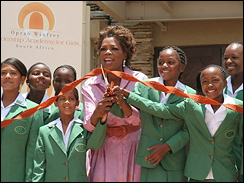
Say what you like about Oprah, but there are times when her ability to stand up for those who cannot stand for themselves always impresses me. I'm sure her publicist has something to say about each of her choices, but seeing a need (as most of us do) and doing something to fill that need (something most of us don't do) are two different things. In a recent story reported by Denis Farell/AP, Oprah Winfrey opened the doors of her $40 million South Africa "leadership academy," giving 152 impoverished young women a shot at a brighter future. "Students, who are all from South Africa and can be of any race, have been chosen based on factors ranging from financial hardship (the girls' families must have a household monthly income below $700) to compelling personal histories."
Of course, we here in the United States welcomed her back home with a wall of criticism wondering why she sends so much of her own money overseas when plenty of U.S. schools could use the support. We're always quick to criticize others when what they do shines a light on what we're NOT doing. Our job is to stand for the children placed in our care, and to do it to the best of our ability. Oprah doesn't have children of her own. Her quote says it all. "I now know this is why I never had children myself. These are my girls, and I love them, every one of them. This is the proudest, greatest day of my life. When you educate a girl, you educate a family, a community - you change the face of a nation."
This is a powerful statement, one I pray parents of girls will consider strongly. Teach your daughters well! Let's not worry about what others do and don't do for children. Make sure you stand strong for your children and hopefully they won't need an Oprah in their life later to stand for them. But I'm glad when there's no one else around Oprah and those like her take a step forward to stand in the gap.
For those of you who have daughters, I love this song by John Mayer. Enjoy!
Saturday, December 09, 2006
Getting Kids What They Need
 One of the ways parents fill in the gaps of a "less than expected" education for their children is to find outside activities, lessons, trips, and recreational pursuits to take up the time that might have been spent on learning in school. If school is too easy, homework is scarce and time spent at home ends up being spent in front of a television or computer screen.
There are many ways you can enrich your child's education, even in front of a computer screen. Of course you can choose from the plethora of education related computer programs, but why not do something for free instead? Scholastic.com offers resources for teachers, parents, and kids to investigate more fully the world of literature. Popular children's books and novels published by Scholastic now includes online teaching guides for the use of classroom teachers, homeschool parents, and other interested parents.
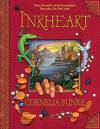
A recent addition to this rich list of literary resources is the activities and online teaching guide to Inkheart by Cornelia Funke. I had the privilege to create this guide for Scholastic. Inkheart is the first book in a trilogy about a book binder and his daughter as they interact with worlds and characters created by writers as they spill into their real life. See the book review of Inkheart for more information on this great title for grades 4-8.
Parents and teachers are always on the hunt for ways to meet the needs of kids in their care. As you evaluate the myriad of resources out there, make sure they point your child to where you want them to go.
Saturday, November 25, 2006
"Caring" is Caught, Not Just Taught
As reported on http://toddlerstoday.com/newsline.php
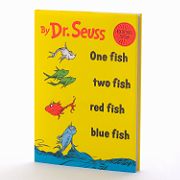
Kohl's Offers Classic Dr. Seuss Stories to Benefit Children's Health and Education
Just in time for the holidays, Kohl's Department Stores is bringing classic stories to customers nationwide. Kohl's is excited to offer exclusive collector's editions of the following Dr. Seuss books: The Sneetches; One Fish, Two Fish, Red Fish, Blue Fish; Green Eggs and Ham; and How the Grinch Stole Christmas. Kohl's is also offering the corresponding stuffed animals.
As part of its Kohl's Cares for Kids program, Kohl's stores across the country will feature the exclusive items for $5 each with 100 percent of the net profits benefiting children's health and educational opportunities in Kohl's communities nationwide. The items will also be available online at www.Kohls.com.
In addition to supporting children's health and educational opportunities, the Kohl's Cares for Kids program features a gift card fundraising opportunity for local schools and nonprofit youth groups; the Kohl's Kids Who Care scholarship program, which recognizes kids who contribute through volunteerism to their local communities; and the associate volunteer program, which encourages volunteerism to benefit local youth-focused nonprofit organizations. For more information on these programs, visit www.kohlscorporation.com.(11-07-06)
**********************************************************************************
This report encourages volunteerism, a character trait we all appreciate and value. Sometimes it seems that cooperations do a better job instilling that value than we do as parents. I'm glad that Kohl's has this program, but I encourage individual families to look at this time of the year for ways that they can volunteer in their own communities. Maybe you can participate in a toys for tots drive, or somehow serve the homeless children in your community. Maybe you can make donations in your family's name instead of giving gifts. If children are going to learn to stand up for the needs of others, they have to learn by watching how we do it.
How can you show you care for kids this holiday season?
Sunday, November 05, 2006
A Shot in the Arm

Childhood vaccines have been a touchy subject with many parents for decades. Some even refuse what that AAP (American Academy of Pediatrics) tout as necessary for public safety. Why? There are those who refuse due to their religious beliefs, but for many the issue is more complicated.
The HPV vaccine is the newest to cause an uproar amongst parents. It has been determined that the Human Papillomavirus Virus, a sexually transmitted disease, may cause cervical cancer. In June the Food and Drug Administration approved the first vaccine designed to protect against cervical cancer. Parents must now decide whether to vaccinate their adolescent daughters against the STD.
If you are a parent of an adolescent girl, or will be in the near future, you will have to decide whether or not to immunize her against this STD that can potentially cause cervical cancer. Religious conservatives have voiced the loudest concern at this recent health initiative. The fear is that is will undermine their own message of abstinence to their daughters. I think it is much more complicated than that, but every parent should have the power to make the decision for their own child.
One of the first steps of advocacy is to be informed. Do your homework! Make sure you educate yourself to all sides of this issue so that you can speak with an educated voice for or against this practice for the sake of your daughter(s).
National Politics & Policy FDA Announces Approval of HPV Vaccine Gardasil
Vaccinate Before You Graduate
Press Release from the FDA
Do Religious Conservatives Really Oppose the HPV Vaccine? (great blog post)
Media Coverage
Several broadcast programs reported on the FDA approval of the HPV vaccine:
CBS' "Evening News": The segment includes comments from Ursula Matulonis, a physician at the Dana-Farber Cancer Institute, and a U.S. woman diagnosed with cervical cancer (Kenniff, "Evening News," CBS, 6/8). The complete segment is available online in RealPlayer.
NBC's "Nightly News": Robert Bazell, science correspondent for NBC, discusses the costs and benefits of the vaccine (Bazell, "Nightly News," NBC, 6/8). The complete segment is available online in Windows Media.
Let us know your thoughts on mandatory vaccines or specifically the HPV vaccine.
Sunday, October 29, 2006
State Pre-K Program Under Fire
 Florida has been at the forefront of education issues like school choice, vouchers, and state standardized testing - its entry into the realm of Universal Pre-K not withstanding. However, this latest educational trend is under fire. In an attempt to rush to the table, Florida has not done their homework. They are not prepared to provide neither full nor part time Pre-K to the 100,000 families who want the program. They're trying to "do pre-K on the cheap," said Abby Thorman, advisor to Gov. Kathleen Sebelius. "Because of both the low per-child funding and the real absence of standards for high quality, Florida became the model of exactly what we didn't want to do."
They say you get what you pay for. This is true for education as well. Quality, certified early education teachers don't just grow on trees, and they are in great demand. So instead of waiting to find those quality teachers, Florida is moving ahead with lower standards.
According to a St. Petersburg Times interview by Jeffrey S. Solocheck, Gladys Wilson, who oversees the state pre-K program, said "there's no proof that a teacher needs a college degree to be effective." Although I agree with this in principle, the greater question is why we're pursuing universal pre-K at all.
If we push for certified pre-K teachers, what does that say about the ability of parents to educate and raise their own preschool age children? The issue isn't really whether or not Florida is a good model to follow, it's whether we should be going down this road at all.
Sunday, October 22, 2006
Before They're Even Born
 It began in the very beginning. I had to decide whether or not to have an amniocentesis after losing our first child to an unusual genetic disorder. During the 16th week of both of my subsequent pregnancies, in 1989 and 1991 respectively, I chose to undergo a procedure that included the penetration of a terrifyingly long needle into my abdomen in search of vital amniotic fluid that would then be tested to see if this baby, like the first, had Turner’s Syndrome. I was classified as high risk and so the doctor insisted on this test as a diagnostic tool. Not that it mattered. We decided well before the procedure that even if the results revealed that this child too had T.S., we would see this pregnancy through to term, God willing.
After this probing, almost alien-like, procedure we were referred to a genetic counselor (another consequence of our previous pregnancy’s outcome). Pam sat facing us and extended her right hand to me and her left to my husband. “I’m your bridge,” she said. “We have a lot to talk about, but first things first.”
I sat on the edge of the hard plastic break room chair almost to tipping and breathed a sign of relief. Finally, someone who could understand the agony Chip and I had already been through. Someone we didn’t have to explain and explain again the depth of our pain and confusion at the loss of our first child, our daughter Emily. We had someone who would stand up for our choice even against doctors who proposed something else. We didn’t have that before. We were alone. The pressure we felt from well meaning doctors made us feel weighed down and rain soaked by their expert opinions. This time, if there were a problem, we had someone to stand firm with us on our values and desires.
Pam had seen it all and worked with countless other parents who struggled with genetic uncertainties. She could speak the language of the medical community and translate when necessary. Chip squeezed my other hand and smiled at me with his own sense of relief. We were going to be okay.
“Before I can advocate for you as parents, I need to make sure I understand your wishes,” Pam began. “This time, if the fetus presents with the same chromosomal defect, would you prefer to terminate instead of waiting for the inevitable death in utero? There’s no reason to put yourself through that pain again.”
There it was. The choice. A choice about our yet unborn child. Any relief I had dissipated like cheap air freshener. She was really one of them. Pam said that she was there to advocate for our wishes, but she’d made assumptions about what those wishes were. Termination was not a choice in our minds, and so it seemed that we were alone yet again to stand up for our child.
Thus begins my new book entitled Standing Up for Your Child (without stepping on toes) to be published by Focus on the Family/Tyndale Publishers in July 2007.
Friday, August 25, 2006
Parents - Student Union Reps
 He got up while it was still dark, shoveled some breakfast into his weary body and finally headed out the door to start another day. The morning carpool was late again, so he waited in the driveway, hands in pockets and eyes closed. The prospect of the day ahead made his head hurt. Monotony, frustration and the unavoidable argument with his partner were all he had to look forward to. Finally his ride skidded into the driveway and he barely shut the car door before it sped away.
He looked out the back window in time to see his mother waving goodbye.
In many ways a child’s school day is no different than their parents’ work day. Some waddle into the school with apprehension and angst, while others hurry to their seats with expectancy and excitement. You can tell by the eyes. Deer caught in headlights or wisdom of the ages owl eyes. Look in the mirror – what do your eyes tell the rest of the world about your job?
The day inches forward and they watch the clock. By 11:00 a.m. stomachs growl and eyes begin to glaze over. Some kids look for any excuse to get up and move around. Pencils could use sharpening. Water fountains entice (even if the water is warm and smells a little weird). Restroom passes are highly coveted, but as a last resort any kid will volunteer to run an errand for the teacher – anything to get up and get going.
Who can blame them? There’s very little wiggle room in a classroom. Squirming can be construed as a symptom of ADHD, and getting up out of your seat without permission is a punishable offense. Outside time either in the form of physical education or recess has been cut dramatically. In fact, 40 percent of the nation’s elementary schools have either dropped or reduced recess in favor of extra classroom time.
Prisoners and even caged dogs at the Humane Society get more breaks than kids in school!
Those who oppose down time at school argue that the more time kids spend in their seats in the classroom, the more they will learn. In this age of school reform and shrinking budgets, some school districts have made some controversial choices. Boston’s superintendent, Nadine Binkley, defends her cut of recess, “I’ve been at this job for a year, and I was hired with a mandate to improve academic achievement. Research tells us this is the way to increase student achievement.”
But early childhood development research disagrees. Olga Jarrett, child development specialist at Georgia State University, says, “A teacher who conducts an entire day without one short recess misunderstands how children learn.”
So it’s a misunderstanding?
Let’s see.
Children have shorter attention spans than adults and yet they get less breaks during the day than adults do in the workplace. Maybe they need their own union.
Public health officials warn that youngsters are too sedentary, but we’ve slashed the physical education programs’ budgets. Many adults are dangerously overweight, so risk management directors create wellness programs to include exercise while on the job. Sure. . . that makes perfect sense.
One might argue that children are in school to learn, not play. So does that mean that adults are at their jobs to work, not play? Can you imagine taking your lunch break at work and someone unseen turns off the lights and yells at you with a bullhorn to put your head down and keep quiet? That happens in schools every day.
No matter whether it’s a misunderstanding or just poor decision making, we all need at least scheduled breaks, physical activity and unstructured play time in order to be productive.
Rebecca Lamphere, a Virginia Beach mom, said it best, “We aren’t raising computers. These are living, breathing bodies.”
Bodies and minds are meant to be in motion. We can advocate for our children’s wellness in school. After all, we’re the only union rep they’ve got!
Copyright 2005 Vicki Caruana. All Rights Reserved.
Subscribe to:
Posts (Atom)